Verification Protocols and Their Role in Structuring Incentive Flows Across Hybrid Mobile and Live Table Platforms
Written by Zara Flores · Oct 15, 2026

Verification Protocols and Their Role in Structuring Incentive Flows Across Hybrid Mobile and Live Table Platforms
Verification protocols establish entry points that determine how incentives distribute across mobile applications and live table environments in combined casino platforms. These systems require identity confirmation before players access layered rewards such as deposit matches, loyalty points, and table-specific bonuses. Data from regulatory filings shows that platforms enforcing multi-stage checks see incentive flows split into initial access tiers and ongoing retention layers, with each stage tied to documented player status.
Operators apply these protocols through document uploads, biometric scans, and third-party database cross-references. Once verified, accounts unlock progressive incentive structures where mobile slot rewards feed into live table privileges. Research indicates that verification completion rates influence the speed at which players move between layers, creating measurable differences in bonus redemption patterns between mobile-only users and those engaging hybrid formats.
Layered Incentive Mechanisms Tied to Verification Stages
Platforms divide incentives into sequential layers that activate only after specific verification milestones. The first layer often grants basic mobile deposit bonuses following initial identity checks. Subsequent layers release live table credits or higher-tier loyalty multipliers once additional documentation confirms address and payment sources. Figures from industry reports reveal that this staged approach reduces duplicate account creation while directing higher-value rewards toward fully authenticated profiles.
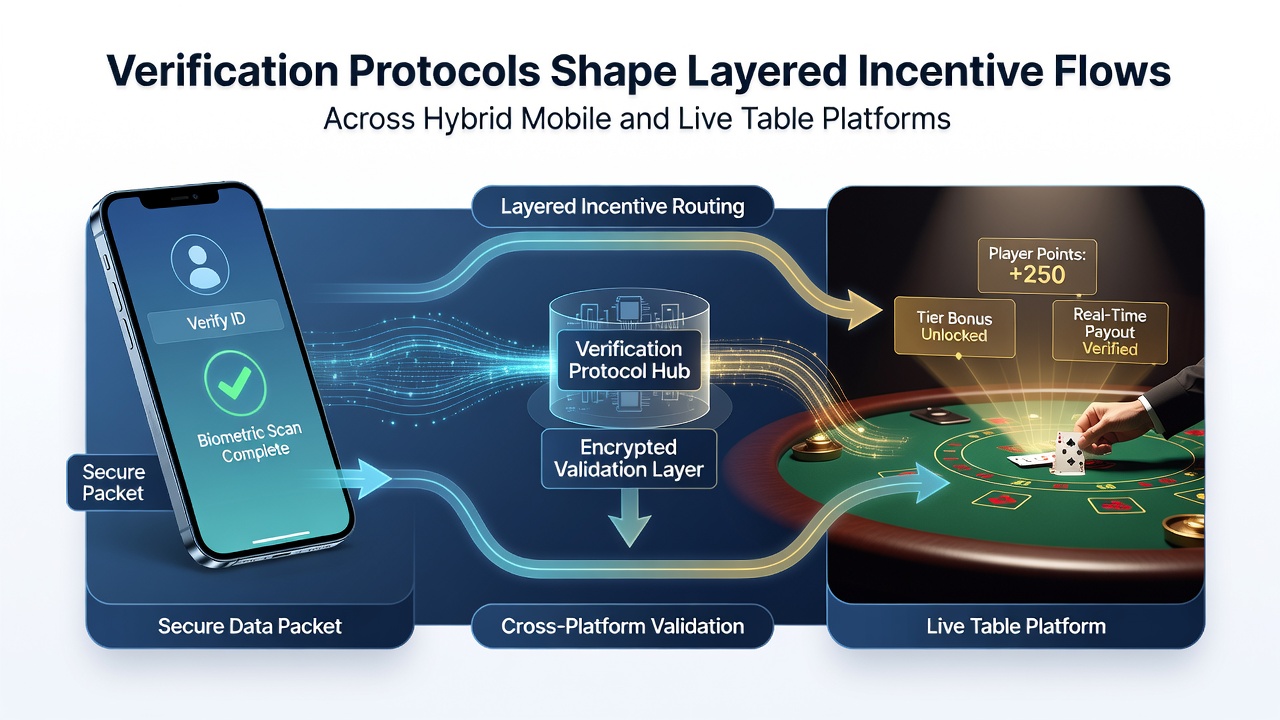
Hybrid systems link mobile activity directly to live table access. A player completing verification on a mobile app can carry verified status to live dealer sessions without repeating the full process. This integration shapes incentive flows by allowing points earned on slots to convert into table rake credits, provided the verification chain remains unbroken across devices. Observers note that such connections appear more frequently in platforms operating under multiple jurisdictional requirements.
Regional Regulatory Influences on Protocol Design
Authorities in different regions impose distinct verification standards that alter how incentives reach players. The New Jersey Division of Gaming Enforcement requires ongoing monitoring that extends verification into real-time transaction reviews, affecting how live table comps accumulate. Meanwhile, Australian state regulators emphasize source-of-funds declarations that tie verification depth to reward size, particularly for live dealer formats accessed via mobile.
These variations create platform-specific incentive maps. One study of North American operators found that stricter verification correlates with slower initial incentive release but higher long-term retention in hybrid environments. Platforms adjust layer thresholds accordingly, often using automated flags to pause rewards until compliance teams complete secondary reviews.
Device-Specific Verification and Cross-Platform Reward Movement
Mobile verification often relies on app-based facial recognition and device fingerprinting, while live table sessions may require additional in-person or video confirmation. This difference influences how incentives transfer between formats. Players who verify primarily through mobile see rewards appear faster in automated games yet encounter delays when shifting to live tables that demand extra checks. Data shows these delays concentrate in October 2026 updates to certain platform APIs, where operators synchronized mobile and live verification databases to reduce friction.
Cross-device incentive flows depend on centralized verification ledgers. When a player moves from mobile slots to live blackjack, the system checks prior verification status to determine eligibility for combined rewards. Those who've studied these patterns report that platforms maintaining unified ledgers experience fewer dropped incentive claims compared with segmented systems.
Impact on Player Behavior and Platform Metrics
Verification timing affects how players engage with layered incentives. Accounts verified within the first 24 hours demonstrate higher rates of moving through all reward tiers, including live table participation. Platforms track these metrics to adjust incentive sizing, with verified hybrid users receiving targeted offers that blend mobile free spins and live dealer cashback. According to reports from the American Gaming Association, such targeted distribution correlates with increased overall platform activity across both formats.
Security protocols also shape incentive visibility. Players flagged for additional verification experience temporary holds on certain layers, which redirects flows toward lower-risk reward categories until clearance. This mechanism maintains compliance while preserving access to basic mobile incentives during review periods.
Conclusion
Verification protocols function as gatekeepers that organize incentive distribution across mobile and live table platforms by establishing clear activation points for each reward layer. Regional rules, device differences, and cross-format linkages determine the precise structure of these flows. Data from multiple operators and regulatory sources confirms that verification completion directly governs access speed and reward value in hybrid environments, producing measurable patterns in player progression and platform retention metrics.